AIVC-16CH AI BOX
 32CH CSN AI NVR
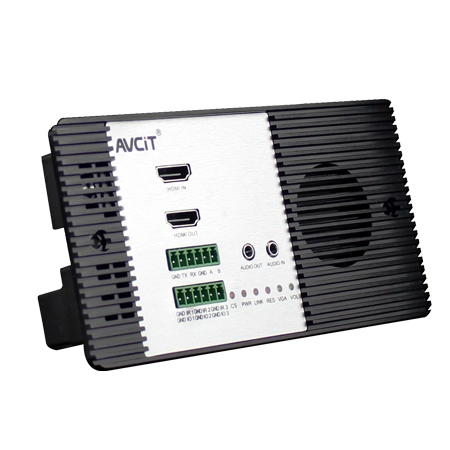
 2K HDMI Video Codec
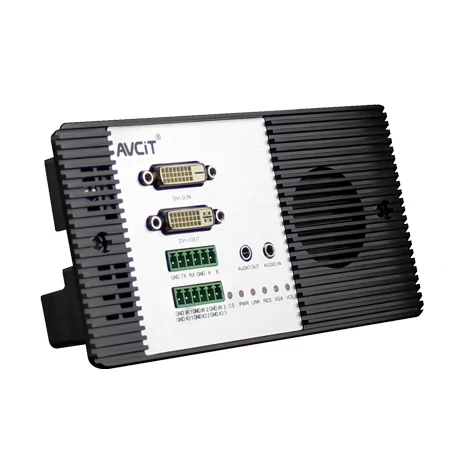
 2K DVI Video Codec
 2K SDI Video Codec
 2K HDMI Video Encoder
 2K DVI Video Encoder
 2K SDI Video Encoder
 2K VGA Video Encoder
 2K Video Wall Decoder (HDMI+DVI)
 4K HDMI Video Encoder
 4K HDMI Video Decoder
 4K HDMI Video Wall Decoder
 4K HDMI + DVI Video Wall Decoder
 4K HDMI Dual Channel Codec
 8K HDMI Decoder
 2K KVM Encoder - HDMI
 2K KVM Encoder - DVI
 2K KVM Encoder - SDI
 2K KVM Encoder - DVI-I(VGA)
 2K KVM Decoder - HDMI
 4K KVM Encoder - HDMI + DP
 4K@60 KVM Encoder - HDMI
 4K KVM Encoder - HDMI + HDMI
 4K KVM Encoder - HDMI
 4K KVM Decoder - HDMI
 4K60 4:4:4 KVM Encoder - HDMI
 4K60 4:4:4 KVM Decoder-HDMI
 4K60 4:4:4 KVM Encoder - HDMI + SDI
 4K60 4:4:4 KVM Decoder - HDMI + SDI
 5K KVM Decoder - HDMI +DP
 Phinx-36 Ports Fiber KVM Matrix
 Phinx-72 Ports Fiber KVM Matrix
 Phinx-144 Ports Fiber KVM Matrix
 Phinx-288 Ports Fiber KVM Matrix
 Phinx-576 Ports Fiber KVM Matrix
 Phinx - I/O SFP Module Card
 Phinx - Video Wall Control Card
 Phinx- Video Wall & SFP Card
 Phinx- Video Card(6IN6OUT)
 2K Video Wall Matrix - 8x8
 2K Video Wall Matrix - 16x16
 2K Video Wall Matrix - 32x32
 2K Video Wall Matrix - 72x72
 2K Video Wall Matrix - 144x144
 4K Video Matrix Switcher - 8x8
 4K Video Matrix Switcher - 36x36
 4K Video Matrix Switcher - 72x72
 4K Video Matrix Switcher - 144x144
 Mixing UHD - 4K HDBT Extender
 Mixing UHD - 4K Fiber Extender
 Rack Mounting Kit
 Wall Mounting Kit


 EN
 es
 th
Blog
Join us
FAQs

 4K KVM Transmitter-HDMI
 4K KVM Transmitter-HDMI+HDMI LOOP
 4K KVM Transmitter-DVI
 4K KVM Transmitter-DVI+DVI LOOP
 4K60 KVM Transmitter - HDMI
 2K KVM Transmitter-VGA
 4K KVM Receiver-HDMI
 4K KVM Receiver-DVI
 Quad-view KVM Receiver-HDMI
 4K60 KVM Receiver - HDMI
 4K60 Quad-view KVM Receiver
 2K KVM Receiver-HDMI
 2K KVM Receiver-DVI
 2K KVM Receiver-VGA
 Mixing HD-2K HDMI Input Card
 Mixing HD-2K DVI Input Card
 Mixing HD-2K SDI Input Card
 Mixing HD-2K VGA Input Card
 Mixing HD-2K AV Input Card
 Mixing HD-HDMI UHD Input Card
 Mixing HD-Fiber Input Card
 Mixing HD-IP Input Card
 Mixing HD-HDMI Output Card
 Mixing HD-DVI Output Card
 Mixing HD-SDI Output Card
 Mixing HD-VGA Output Card
 Mixing HD-AV Output Card
 Mixing HD-Fiber Output Card
 Mixing HD-IP Output Card
Mixing HD-HDMI Video Wall Control Card (2 channel)
 Mixing HD-HDMI Video Wall Control Card (1 channel)
 Mixing HD-DVI Video Wall Control Card (2 channel)
 Mixing HD-DVI Video Wall Control Card (1 channel)
 Mixing UHD - HDMI Input Card
 Mixing UHD - DVI Input Card
 Mixing UHD - SDI Input Card
 Mixing UHD - VGA Input Card
 Mixing UHD - AV Input Card
 Mixing UHD - HDBT Input Card
 Mixing UHD - Fiber Input Card
 Mixing UHD - HDBT Output Card
 Mixing UHD - HDMI Output Card
 Mixing UHD - DVI Output Card
 Mixing UHD - SDI Output Card
 Mixing UHD - VGA Output Card
 Mixing UHD - AV Output Card
 Mixing UHD - Fiber Output Card
On September 16, the Pinglu Canal was officially completed and opened to navigation. This hundred-million-ton-class waterway artery - stretching 134.2 kilometers and linking the Pearl River–Xijiang River basin with Beibu Gulf Port—is now in operation.
Why is it called a "project of the century"? Because it is the first canal connecting inland rivers to the sea to be planned and built at the national level since the founding of China. Once in operation, it will open up the shortest, most economical and most convenient sea route for Guangxi's inland areas as well as China's southwest and northwest regions. It will accelerate the conversion of resource advantages along the New International Land-Sea Trade Corridor, drive the development of cross-border and cross-regional industrial and supply chains spanning across several provinces and serve as a strategic hub linking domestic and international dual circulation.
Behind this project of the century lies a vital contribution from AVCiT Technology. Let's take a look inside the Pinglu Canal's dispatch center and reveal the "most powerful brain" working behind the scenes.
Most people look at the Pinglu Canal and see how ships pass through the locks and how waterways are navigated. But for a 134.2-kilometer canal, the real lifeline is not on the water-it lies in dispatching.
Data from more than 20,000 sets of sensing devices across the entire line must be aggregated in real time. Lock gate operations, vessel transit and navigation safety all require millisecond-level response. Any freeze, blackout or delay could disrupt the operation of the entire canal.
The core support for this "brain" comes from AVCiT Technology. As the first listed company in China dedicated to the distributed audio-visual field, AVCiT Technology is the supplier of the distributed integrated control and collaboration systems for the canal's two command centers in Nanning and Qingnian.
The Nanning dispatch center oversees the overall situation while the Qingnian dispatch center handles front-line command; either can take over from the other at any time. If one host fails, another immediately takes its place-almost imperceptibly to dispatchers. For a national canal that cannot suspend navigation, this is the bottom line.
The three modes - crew piloting, system assistance and remote dispatcher takeover-switch seamlessly. In complex channels or emergencies,
AVCiT's distributed system solves exactly this problem: with low latency and no compression, high-definition images from the vessel are pushed to the large screen in real time, while dispatcher commands are transmitted back to the vessel losslessly. Dispatchers can directly remote-control vessels from the control room. What does ≤ 2ms mean? Far faster than the blink of an eye-commands arrive almost instantaneously.
Modes | Description | Scenarios | Technical Challenges |
Vessel crew piloting | Crew operates on board | Routine navigation, daily transit | Fatigue from long shifts; reliance on crew experience |
Remote takeover by command center | Dispatchers remotely control vessels via the smart maritime navigation remote cockpit | Special vessels passing locks, transit through complex channels, emergency response | Ultra-low latency of ≤2 ms, lossless image transmission, high precision requirements |
Intelligent recognition and autonomous navigation | System automatically identifies channels and assists navigation | Assisted piloting on regular routes; reducing crew workload | Complex scenario recognition, fallback for extreme situations, system stability |
The digital twin platform reproduces the entire canal at 1:1 scale. This is not ordinary screen mirroring, but a complete operator workstation collaboration system - every workstation can control the whole canal as if seated right beside the vessel. Water levels, lock status and vessel positions are all visible at a glance. No matter the opening and closing of gates dozens of kilometers away, or the control of filling and emptying valves, can all be handled with a single click at the command center.
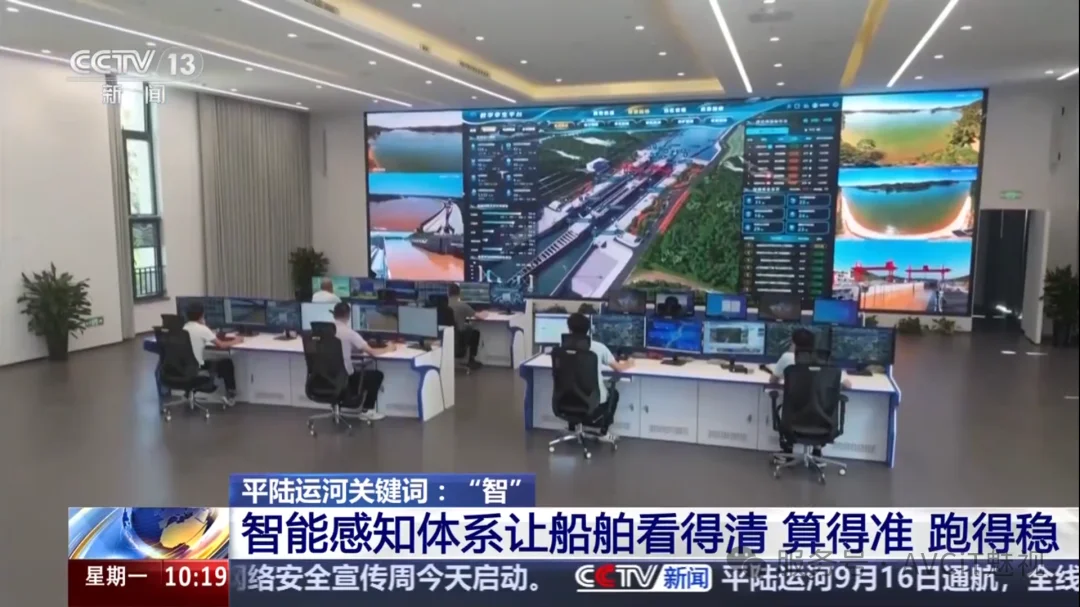
What AVCiT Technology has done is to free the canal's dispatchers to focus entirely on decision-making, rather than hunting for signals, switching screens or adjusting resolutions. One system supporting the "brain" of a national canal - this is the power of technology.
More news reports:
Reach out to the AVCiT team today to learn how the AI Box can help enhance your store management.
LinkedIn: AVCiT Technology
Facebook: AVCiT Technology